
How to Start Pasta with Spinach in Less Than an Hour
Why Pasta with Spinach Is the Weeknight Dinner You’ve Been Missing
Pasta with spinach is one of the fastest, most satisfying vegetarian meals you can make — ready in as little as 15 to 30 minutes with just a handful of simple ingredients.
Quick answer — here’s what you need to know:
- Time: Ready in 15–30 minutes
- Key ingredients: Pasta, fresh or frozen spinach, garlic, olive oil or butter, Parmesan, and a creamy element (cream cheese, heavy cream, or evaporated milk)
- Best pasta shapes: Rigatoni, penne, fettuccine, fusilli — anything that holds sauce well
- Spinach: Use 2–3 oz of fresh baby spinach per person (it wilts down a lot)
- Creamy sauce tip: Reserve ½ cup of pasta cooking water — it’s the secret to a silky, clingy sauce
- Frozen spinach works: Thaw it and squeeze out all moisture first
It’s the kind of dish that feels indulgent but is genuinely good for you. Spinach is packed with Vitamin A, Vitamin C, Vitamin K, iron, potassium, and calcium. And because spinach wilts down dramatically when cooked, even a large amount of it becomes easy to tuck into a single pan of pasta.
Whether you’re cooking for yourself after a long day or feeding a family, this dish delivers big flavor without a lot of effort.
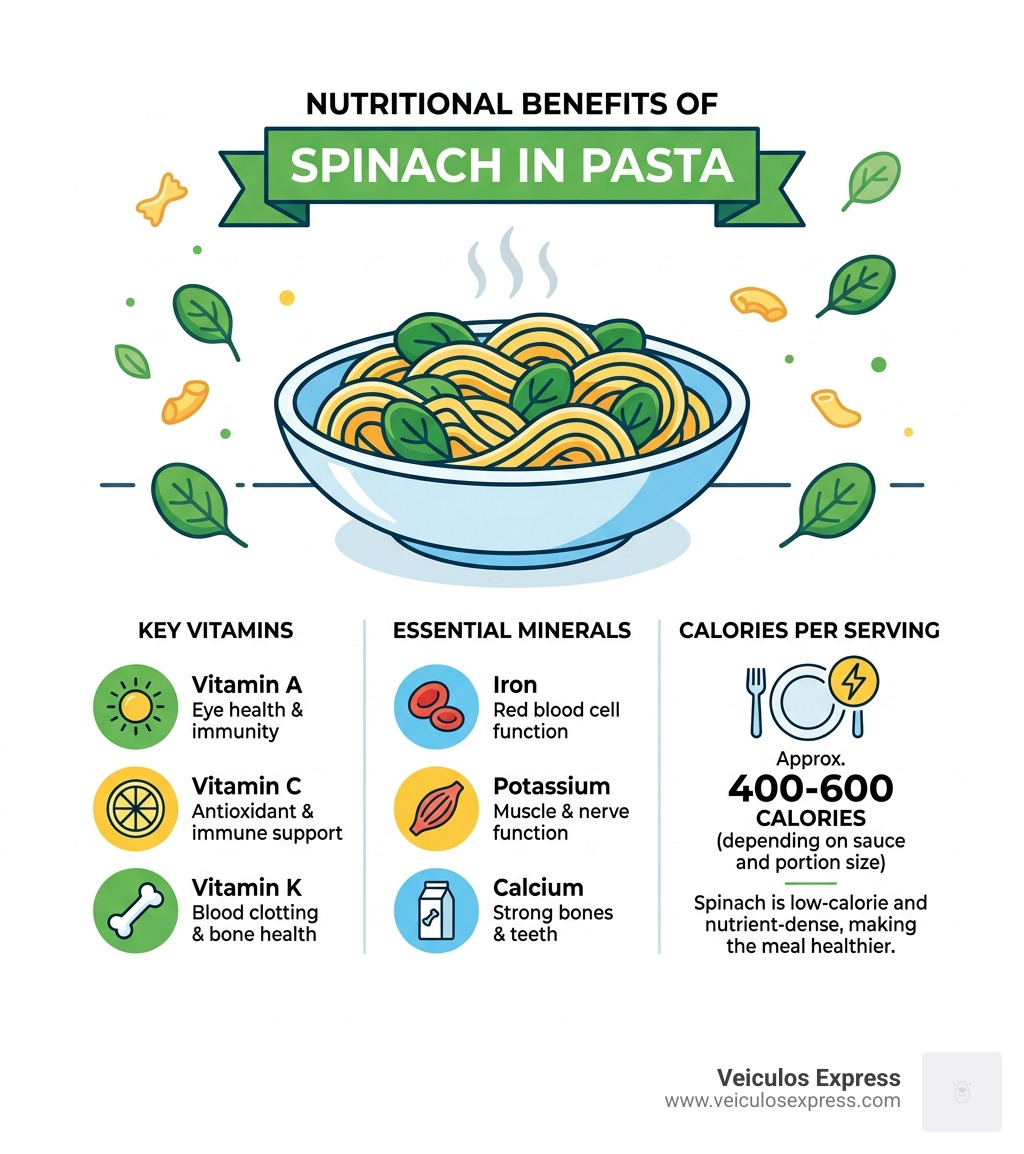
The Essentials of a Perfect Pasta with Spinach
When we talk about pasta with spinach, the beauty lies in the simplicity. Because there are so few components, the quality of each one matters. We’ve found that a few pantry staples can transform a basic bowl of noodles into a restaurant-quality meal.
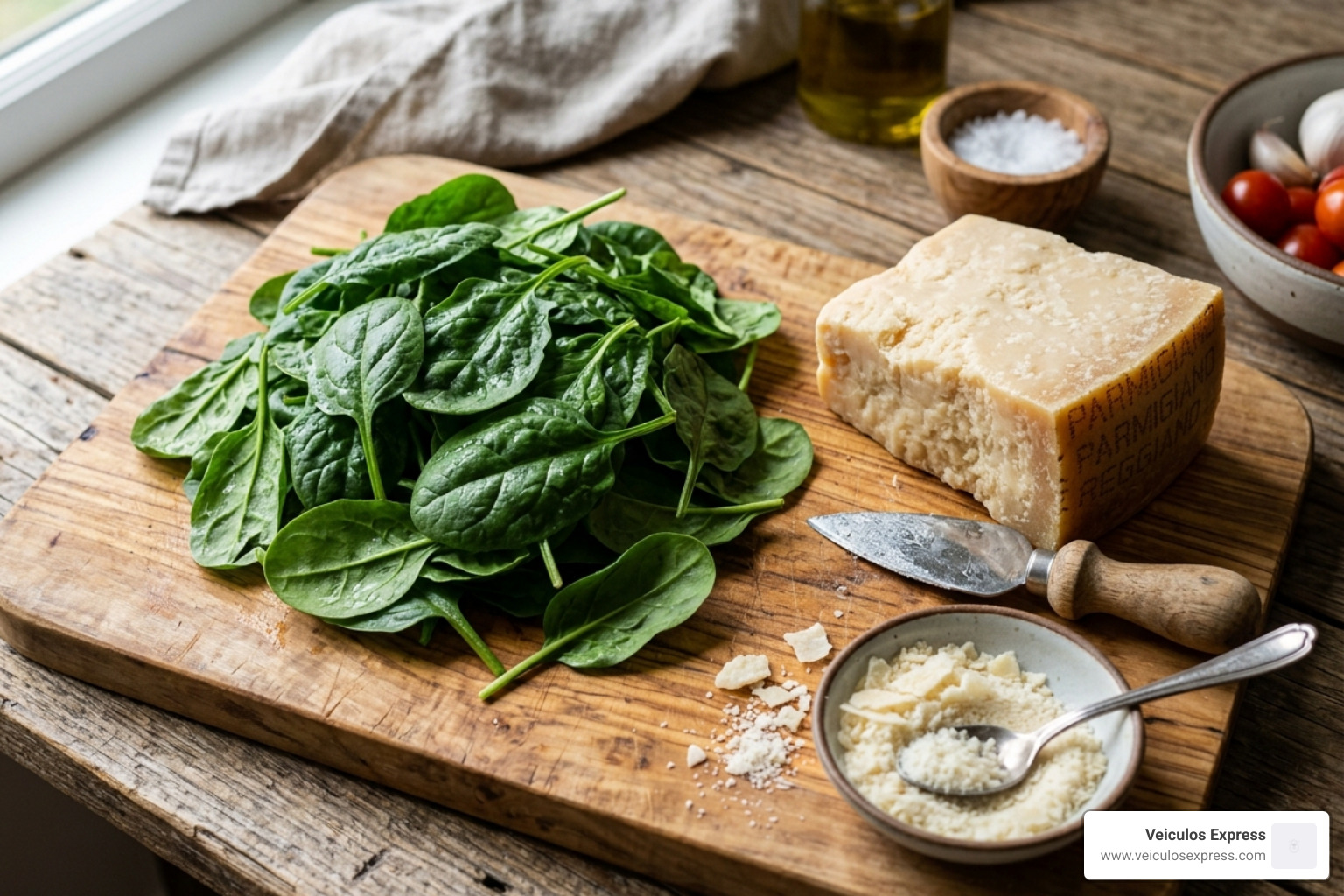
The Green Star: Baby Spinach
While you can use mature spinach, we highly recommend fresh baby spinach. It has a milder flavor and a much more tender texture. Plus, it wilts almost instantly in the heat of the pan, meaning you won’t have to spend extra time chopping or stems-removing. If you are curious about how to balance your greens with other flavors, check out our basil-ly-the-best-pesto-pasta-ingredient-checklist for more herb and veggie inspiration.
The Flavor Foundation: Garlic and Fat
Don’t be shy with the garlic. We suggest using at least three to four cloves for a standard four-serving recipe. Sautéing them in high-quality olive oil or butter (or a mix of both) creates the aromatic base that the spinach needs to shine. For a bit of extra depth, try browning your butter for about two minutes until it foams and smells nutty before adding the garlic. It adds a subtle sweetness that balances the earthy spinach perfectly.
The “Secret” Seasonings
To elevate the sauce, we always include:
- Nutmeg: Just a pinch. It’s a classic pairing with spinach and dairy, adding a warmth you can’t quite put your finger on but would definitely miss if it were gone.
- Red Pepper Flakes: For a tiny bit of “zip” without making the dish spicy.
- Lemon Zest: A squeeze of fresh lemon juice or a bit of zest at the end brightens the entire dish, cutting through the richness of the cheese and cream.
- Freshly Grated Parmesan: This is non-negotiable for us. Pre-shredded cheese is coated in cellulose to prevent clumping, which means it won’t melt into a smooth sauce. Buy the block and grate it yourself—your taste buds will thank you.
Choosing the Best Pasta Shapes for Spinach Sauce
The shape of your pasta isn’t just about aesthetics; it’s about “sauce-ability.” You want a noodle that can catch the wilted leaves and hold onto the creamy sauce.
- Long Noodles (Linguine, Fettuccine, Tagliatelle): These are excellent because the spinach leaves tend to wrap around the strands, ensuring you get a bit of green in every bite.
- Tubular Shapes (Penne Rigate, Rigatoni, Ziti): We love these for creamier versions of pasta with spinach. The ridges (rigate) act like tiny “sauce catchers,” while the hollow centers can trap bits of garlic and small spinach fragments.
- Twisted Shapes (Fusilli, Rotini): These are perhaps the best for maximum surface area. The spirals are perfect for grabbing onto a thicker, cheese-based sauce.
- Stuffed Pasta: If you want to go the extra mile, using something like a a-saucy-affair-with-cheese-tortellini as your base adds another layer of cheesy goodness.
Pro Tip: Look for “bronze-cut” pasta. It has a rougher texture than standard pasta, which helps the sauce adhere much better.
Achieving the Perfect Creamy Texture
One of the most common questions we get is how to make the sauce creamy without it feeling like a heavy “gut bomb.” You have a few great options depending on what’s in your fridge:
- The Cream Cheese Method: This is one of the fastest ways to get a rich sauce. Stirring in 2–4 ounces of cream cheese along with a splash of pasta water creates an instant, velvety coating.
- The Evaporated Milk Trick: As highlighted in several top-rated recipes, evaporated milk is a fantastic lighter alternative to heavy cream. It’s concentrated, so it provides richness with less fat.
- The Pasta Water Emulsion: If you want to keep it very light, you don’t actually need dairy at all. By tossing the pasta with the garlic butter, spinach, and a generous splash of starchy pasta water, you create a natural emulsion that coats the noodles beautifully.
- The Ricotta Finish: For a “steakhouse creamed spinach” vibe, dollop some high-quality ricotta over the finished dish. It adds a fresh, milky flavor. If you’re a fan of this texture, you might also enjoy our garlic-ricotta-pasta-because-you-didnt-need-that-first-date-anyway recipe.
Step-by-Step: Creamy Spinach Pasta in Under 30 Minutes
Making pasta with spinach is all about timing. If you start the sauce just a few minutes after the pasta hits the boiling water, everything will finish at exactly the same time.
1. Boil the Pasta
Bring a large pot of heavily salted water to a boil. Cook your pasta until it is al dente (usually 1–2 minutes less than the package directions). CRITICAL STEP: Before you drain the pasta, scoop out at least one cup of the cloudy pasta water. This “liquid gold” is essential for your sauce.
2. Sauté the Aromatics
While the pasta boils, melt butter or heat olive oil in a large skillet over medium heat. Add your minced garlic and red pepper flakes. Cook for about 1–2 minutes until the garlic is fragrant and golden, but be careful not to let it turn brown or bitter.
3. Wilt the Spinach
Add the spinach to the skillet. It will look like a mountain of greens at first, but don’t worry—it wilts down to almost nothing. Add it in handfuls, tossing with tongs. Season with a pinch of salt to help draw out the moisture. This should only take about 1–2 minutes. We have many more easy-vegetarian-pasta-recipes if you find yourself falling in love with this quick sauté technique.
4. Build the Sauce
Turn the heat to low. Stir in your creamy element (cream cheese, heavy cream, or just a splash of pasta water). Whisk in your freshly grated Parmesan and a pinch of nutmeg.
5. The Big Toss
Add the drained pasta directly into the skillet. Pour in about ¼ to ½ cup of the reserved pasta water. Toss everything together vigorously with tongs. The starch in the water will help the cheese and fat bind into a silky sauce that clings to every noodle.
6. Final Flourish
Taste it! Add a squeeze of lemon juice, more salt if needed, and a final sprinkle of Parmesan before serving.
| Feature | Fresh Baby Spinach | Frozen Spinach |
|---|---|---|
| Prep Time | Zero (just wash) | 10 mins (thaw & squeeze) |
| Cooking Time | 1–2 minutes | 3–4 minutes |
| Texture | Tender, bright | Soft, more integrated |
| Volume | Wilts significantly | Already reduced |
| Best For | Light, garlicky sauces | Rich, creamy tomato sauces |
Fresh vs. Frozen: Preparing Your Pasta with Spinach
Can you use frozen spinach? Absolutely! In fact, many of our favorite budget-friendly versions use it. However, the preparation is different.
The Golden Rule of Frozen Spinach: You must squeeze out the water. Frozen spinach holds an incredible amount of moisture. If you toss it directly into the pan, your sauce will become a watery, gray mess.
- How to do it: Thaw the spinach (either in the fridge overnight or in the microwave). Place it in a clean kitchen towel or a fine-mesh sieve and squeeze with all your might until no more green liquid comes out.
- The Result: You’ll be left with a dense “puck” of spinach. Break this up and stir it into your sauce. It won’t have the vibrant green look of fresh leaves, but the nutritional value is nearly identical, and it blends beautifully into creamy tomato or white sauces.
Popular Variations and Protein Additions
Once you’ve mastered the basic pasta with spinach, the world is your oyster. This dish is a blank canvas for whatever you have in the fridge.
- Add Protein:
- Chicken: Sliced grilled chicken breast or even shredded rotisserie chicken is a natural fit. For a complete guide, see how-to-make-the-best-chicken-and-vegetable-pasta-ever.
- Sausage: Italian chicken sausage or spicy pork sausage adds a savory kick.
- Shrimp: Sauté some shrimp in the garlic butter before adding the spinach for a more elegant meal.
- Add More Veggies:
- Sun-dried Tomatoes: These add a chewy texture and a concentrated burst of sweetness.
- Mushrooms: Sautéed cremini or shiitake mushrooms add an earthy, “meaty” depth to vegetarian versions.
- Cherry Tomatoes: Let them “burst” in the pan with the garlic to create a light, fresh sauce base.
- Add Crunch:
- Pine Nuts or Pistachios: Toasted nuts add a sophisticated crunch and buttery flavor.
- Panko Breadcrumbs: Toast some panko in butter and garlic to sprinkle over the top for a “restaurant-style” finish.
Pro Tips for Storage, Reheating, and Avoiding Common Mistakes
Even the simplest dishes have a few pitfalls. Here is how we ensure our pasta with spinach stays perfect from the first bite to the leftovers the next day.
Avoid the “Pre-Shredded” Trap
We mentioned this earlier, but it’s worth repeating. Pre-shredded cheese contains potato starch or cellulose. This prevents the cheese from sticking together in the bag, but it also prevents it from melting smoothly in your pan. For a sauce that isn’t grainy or clumpy, grate your Parmesan or Pecorino Romano fresh from the block.
Don’t Overcook the Spinach
Spinach should be the last thing that goes into the pan (or the second to last, right before the pasta). You want it to be just wilted—vibrant green and tender. If you cook it too long, it turns dark, slimy, and loses its delicate flavor. If you’re worried about your sauce timing, check out our tips on youre-the-zest-making-the-perfect-basil-tomato-sauce-for-pasta for general sauce-making wisdom.
The Art of Reheating
Creamy pasta is notorious for drying out in the fridge. The noodles continue to soak up the sauce as they sit.
- To Reheat: Don’t just throw it in the microwave on high. Put the pasta in a skillet over medium-low heat and add a splash of milk, broth, or even a little water. This “loosens” the sauce and restores the creaminess.
- Storage: Keep leftovers in an airtight container for up to 3–4 days. We don’t recommend freezing creamy pasta, as the dairy can separate and the noodles can become mushy upon thawing.
Why Is My Sauce Watery?
This usually happens for two reasons:
- You didn’t drain your pasta well enough.
- The spinach released too much moisture. If your sauce looks thin, let it simmer for an extra minute, or add an extra handful of grated cheese to help thicken it up.
Frequently Asked Questions about Pasta with Spinach
How much spinach do I need per serving?
Spinach is a bit of a magician—it disappears! A good rule of thumb is 2 to 3 ounces (about two large handfuls) of fresh baby spinach per person. It will look like a lot in the pan, but once it wilts, it will be the perfect ratio to the pasta.
Can I make this recipe vegan or gluten-free?
Yes!
- For Vegan: Use a high-quality olive oil instead of butter, and swap the Parmesan for nutritional yeast or a vegan Parmesan alternative. For the creaminess, full-fat coconut milk (it won’t taste like coconut once you add garlic!) or a cashew-based cream works beautifully.
- For Gluten-Free: Simply use your favorite gluten-free pasta. Just be extra careful with the cooking time, as GF pasta can go from al dente to mushy very quickly. Be sure to still reserve that starchy pasta water!
Why does my spinach sauce turn watery?
As we mentioned in the “Pro Tips,” this is usually due to the water clinging to the spinach leaves or the pasta. Make sure to pat your fresh spinach dry after washing it, and if you’re using frozen spinach, squeeze it until it’s practically bone-dry.
Conclusion
At Veiculos Express, we believe that a great meal doesn’t have to take hours of preparation. Pasta with spinach is the ultimate proof that with a few high-quality ingredients and a little bit of technique, you can have a nutritious, family-friendly dinner on the table in less than 30 minutes.
It’s versatile, budget-friendly (often costing less than $1.00 per serving!), and a fantastic way to “sneak” more greens into your diet. Whether you keep it simple with garlic and oil or go all out with a creamy sun-dried tomato sauce, it’s a recipe that never goes out of style.
Ready to expand your meatless Monday repertoire? Explore more healthy meal ideas on our pillar page for vegetarian inspiration! Happy cooking!
