
Why Homemade Basil Tomato Sauce for Pasta Beats Every Jar on the Shelf
Basil tomato sauce for pasta is one of the simplest, most rewarding things you can make at home — and it takes as little as 20 minutes.
Here’s the quick version if you’re short on time:
- Heat olive oil in a pan over medium heat
- Sauté garlic (sliced or minced) for 30–60 seconds until fragrant
- Add canned whole or crushed tomatoes and break them up
- Simmer for 10–30 minutes until thickened
- Stir in fresh basil leaves at the very end, off the heat
That’s it. No fancy skills. No hard-to-find ingredients.
Most recipes rate between 4.7 and 5 stars, and for good reason — fresh garlic, ripe tomatoes, and a handful of basil leaves do most of the work for you. Whether you have 20 minutes or 2 hours, a homemade sauce will taste noticeably better than store-bought, which often contains added sugar to mask lower-quality tomatoes.
This guide walks you through everything: choosing ingredients, nailing the technique, and storing leftovers so you always have a quick meal ready.

The Foundation of a Classic Basil Tomato Sauce for Pasta
To create a truly exceptional basil tomato sauce for pasta, we need to talk about the “Big Five” ingredients. When a recipe is this simple, the quality of each component matters. You don’t need a pantry full of spices; you just need a few things done right.
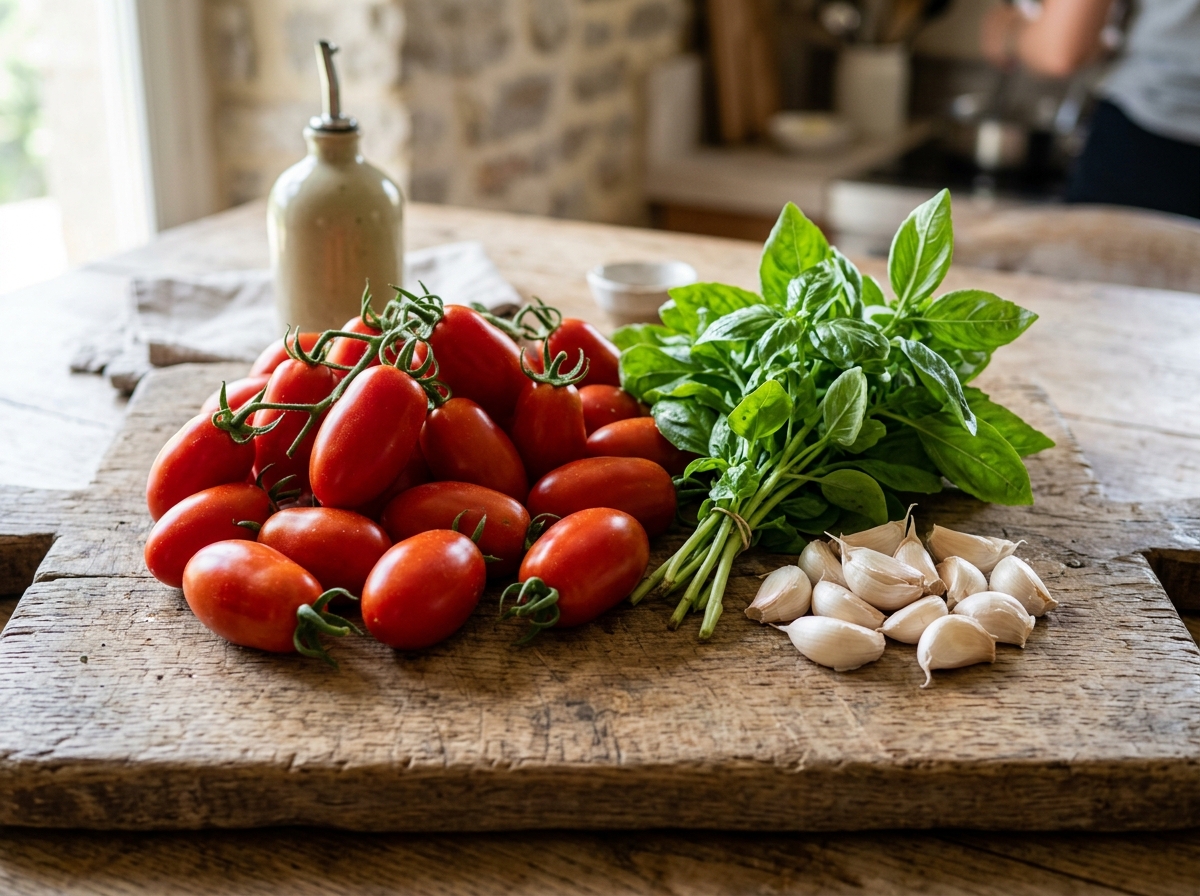
- San Marzano Tomatoes: Often called the “gold standard” of sauce tomatoes, these are a specific Italian variety (not a brand) known for their low acidity, meaty texture, and fewer seeds. They provide a naturally sweet base that doesn’t require much “fixing.”
- Extra Virgin Olive Oil (EVOO): This is the fat that carries the flavor. We recommend a good quality oil, but avoid anything too “peppery” or aggressive, which can turn bitter when heated.
- Fresh Basil: This is non-negotiable. Dried basil has its place, but not here. Fresh basil provides a bright, peppery, and slightly sweet aroma that defines the dish.
- Garlic: Use fresh cloves. Jarred minced garlic often has a strange, acidic aftertaste that can ruin a delicate sauce.
- Sea Salt and Black Pepper: These are your tools for balancing the natural sweetness of the tomatoes.
Fresh vs. Canned Tomatoes for Sauce
One of the most common questions we hear is whether fresh or canned tomatoes make a better basil tomato sauce for pasta. The answer actually depends on the season and how much time you have.
| Feature | Fresh Tomatoes | Canned Tomatoes (Whole/Peeled) |
|---|---|---|
| Best Time to Use | Peak summer (August/September) | Year-round |
| Prep Time | High (requires blanching or grating) | Low (open the can and go) |
| Flavor Profile | Bright, light, and “garden-fresh” | Deep, rich, and consistent |
| Texture | Can be watery if not drained | Thick and luscious |
| Recommended Type | Roma, Plum, or Heirloom | San Marzano or Italian “Pelati” |
Mastering Garlic and Tomato Textures in Your Basil Tomato Sauce for Pasta
The way we prep our ingredients changes the chemical makeup of the sauce. It’s not just about aesthetics; it’s about science!
The Garlic Factor Did you know that the finer you chop garlic, the stronger it gets? When garlic cells are ruptured, a chemical called allicin is created.
- Sliced Garlic: Slicing garlic thinly provides a subtle, sweet, and mellow flavor. It’s perfect for a “rustic” sauce where you want to see the ingredients.
- Minced or Crushed Garlic: This releases more allicin, giving the sauce a punchy, sharp garlic hit. If you go this route, be careful not to brown it too much, or it will turn bitter.
The Tomato Texture How you handle the tomatoes determines if your sauce is a smooth puree or a chunky, rustic delight.
- The Grating Method: If you are using fresh tomatoes, try cutting them in half and rubbing the flesh against a box grater. The skin stays in your hand, and the pulp goes into the bowl. It’s a brilliant way to skip the boiling/peeling step!
- Mashing: For canned whole tomatoes, we love using a potato masher directly in the pan. This leaves some “body” in the sauce.
- Pureeing: If you prefer a silky, restaurant-style texture, a quick pulse in the blender or using an immersion blender will do the trick. Just be careful—over-blending can sometimes incorporate too much air, turning the sauce a pale orange color.
Pro Tips for Enhancing Your Basil Tomato Sauce for Pasta
We’ve all had that moment where we taste our sauce and think, “It’s good… but it’s missing something.” Here are the professional secrets to taking your basil tomato sauce for pasta from “good” to “gourmet.”
- The Magic of Pasta Water: Never drain your pasta completely! Save about half a cup of that salty, starchy water. When you toss the pasta with the sauce, add a splash of this water. The starch acts as a binder, helping the sauce cling to every strand of noodle rather than sliding off to the bottom of the bowl.
- Tear, Don’t Cut: When adding your fresh basil, put the knife away. Cutting basil with a metal blade can bruise the leaves and cause them to turn black. Instead, hand-tear the leaves. This releases the essential oils more gently and keeps the color vibrant.
- The “Off-Heat” Finish: Always add your fresh basil and a drizzle of “finishing” olive oil after you turn off the burner. High heat kills the delicate aroma of fresh basil.
- The Butter Secret: Many Italian home cooks swear by stirring in a tablespoon of unsalted butter at the very end. It adds a velvety richness and a glossy sheen that rounds out the acidity of the tomatoes.
- Acidity Balance: If your tomatoes are a bit too tart, don’t reach for a bag of sugar immediately. Try a tiny splash of balsamic vinegar first. It adds sweetness and depth. If it’s still too sharp, a tiny pinch of sugar (we’re talking 1/4 teaspoon) is usually all you need.
Essential Steps for Homemade Success
Making a great sauce is about building layers of flavor. While the “quick” version is great for Tuesdays, taking a few extra minutes to build a “Soffritto” can change your life.
The Soffritto Foundation
In traditional Italian cooking, many sauces start with a Soffritto—a finely diced mixture of onion, celery, and carrots sautéed in olive oil. This creates a deep, complex sweetness that you can’t get from tomatoes alone.
- Step 1: Finely dice your aromatics.
- Step 2: Sauté them in olive oil over medium-low heat. You aren’t looking to brown them; you want them to “sweat” until they are soft and translucent. This can take 10–15 minutes.
- Step 3: Add your garlic and cook for just 30 seconds before adding the tomatoes.
The Simmering Process
Simmering isn’t just about heating things up; it’s about reduction. As the water evaporates, the flavors concentrate.
- Lid On or Off? If your sauce is looking a bit watery, keep the lid off. This allows the steam to escape, thickening the sauce naturally.
- The “Vincenzo” Method: Some experts suggest simmering with a lid for the first hour to meld flavors, then removing the lid for the final 30 minutes to achieve that “thick and luscious” consistency.
Essential Kitchen Tools for Sauce Making
You don’t need much, but having these items makes the process smoother:
- A Heavy-Bottomed Pan: A Dutch oven or a heavy stainless steel skillet distributes heat evenly, preventing the bottom from scorching.
- Wooden Spoon: Perfect for scraping up the “fond” (the tasty brown bits) from the bottom of the pan.
- Box Grater: For the fresh tomato “grating method” mentioned earlier.
- Potato Masher: The best tool for achieving a rustic, chunky texture with whole canned tomatoes.
Simmering Times and Flavor Variations
One of the best things about basil tomato sauce for pasta is its versatility. You can tailor it to your schedule and your taste buds.
The 20-Minute Quick Sauce Perfect for weeknights. By using crushed tomatoes or passata and skipping the carrot/celery base, you can have a bright, punchy sauce ready in the time it takes to boil your pasta water.
The 2-Hour Slow Simmer This is for Sunday afternoons. A long simmer allows the tomatoes to break down completely, turning the sauce a deep, brick red. The flavor becomes less “acidic” and more “savory.”
Popular Variations
Once you’ve mastered the basic basil tomato sauce for pasta, try these twists:
- Spicy Arrabbiata: Add a generous teaspoon of red pepper flakes to the oil when you sauté the garlic.
- Creamy Mascarpone: Stir in 2 tablespoons of mascarpone cheese or heavy cream at the end for a pink, velvety sauce.
- Sweet Spiced: Some regions add a pinch of cinnamon or cloves to complement the sweetness of the basil—great for pairing with meatier pasta shapes.
If you love experimenting with plant-based meals, check out our other easy vegetarian pasta recipes for more inspiration!
Storage, Freezing, and Creative Serving Suggestions
Don’t let a single drop of that liquid gold go to waste. Homemade sauce stores beautifully, often tasting even better the next day as the flavors continue to meld.
Storage and Shelf Life
- Refrigeration: Store your sauce in an airtight container (glass mason jars are perfect) for up to 5–7 days.
- Freezing: This sauce is a freezer superstar. It stays fresh for up to 6 months. We recommend freezing it in smaller portions (like 1-cup containers or even freezer bags laid flat) so you only thaw what you need.
- Pro Tip: If you’re freezing the sauce, leave the fresh basil out and add it fresh when you reheat the sauce. Frozen basil can sometimes turn bitter or lose its vibrant aroma.
Beyond the Pasta Bowl
While we love it over spaghetti, this sauce is a versatile workhorse in the kitchen:
- Pizza Base: It’s better than any store-bought pizza sauce.
- Meatball Subs: Simmer your meatballs directly in the sauce for a killer sandwich.
- Dipping Sauce: Serve it alongside mozzarella sticks or toasted ravioli.
- Chicken Parmesan: Spoon it over breaded chicken breasts, top with mozzarella, and bake until bubbly.
- Eggplant Parmesan: Layer it with fried eggplant and parmesan cheese for a classic vegetarian feast.
Frequently Asked Questions about Basil Tomato Sauce
Should I use fresh or canned tomatoes for the best flavor?
If it’s the height of summer and you have access to vine-ripened garden tomatoes, fresh is unbeatable for a light, bright sauce. However, for the rest of the year, high-quality canned Italian tomatoes (like San Marzano) are actually superior to the “plastic-ey” tomatoes found in grocery stores. Canned tomatoes are picked and packed at their peak ripeness, ensuring a consistent, deep flavor.
How long can I store homemade tomato sauce in the freezer?
You can safely store it for up to 6 months. For the best quality, use airtight containers and leave a little bit of “headspace” at the top, as the sauce will expand slightly as it freezes.
Why do some recipes call for adding sugar or butter at the end?
Tomatoes contain natural acids. Depending on the soil they were grown in, that acidity can sometimes be a bit “sharp” or metallic. A tiny pinch of sugar or a knob of butter helps to neutralize that sharpness, creating a smoother, more balanced flavor profile on the tongue.
Conclusion
Mastering a classic basil tomato sauce for pasta is a fundamental culinary skill that pays dividends for years. It’s a healthier, tastier, and more authentic way to enjoy one of the world’s favorite comfort foods. By focusing on high-quality ingredients like San Marzano tomatoes and fresh basil, and using simple techniques like the “off-heat” finish, you can create a meal that rivals any Italian trattoria.
At Veiculos Express, we believe that the best things in life are simple, fresh, and shared with loved ones. We hope this guide inspires you to get into the kitchen and start simmering!
Ready to expand your meat-free repertoire? Explore more vegetarian delights on our blog and discover how easy it is to eat well every day. Buon appetito!
