
Prep Ahead Vegetarian Meals to Save Your Weeknights and Your Sanity
Why Prepare Ahead Vegetarian Meals Makes Weeknight Cooking So Much Easier
Prepare ahead vegetarian meals are one of the smartest ways to eat well without spending hours in the kitchen every night.
Here’s a quick overview of how to get started:
- Pick sturdy ingredients – beans, lentils, grains, tofu, and vegetables like broccoli, sweet potatoes, and cauliflower hold up well after cooking and reheating
- Batch cook on one day – dedicate 1-2 hours on a Sunday to prep meals for the whole week
- Store correctly – use airtight containers; most meals keep 3-4 days in the fridge or up to 3-4 months in the freezer
- Reheat with care – oven reheating keeps texture best; add coconut milk or fresh toppings after thawing
- Start simple – soups, chilis, casseroles, and grain bowls are the easiest meals to prep ahead
Picture this: it’s 7 PM, everyone just got home, and nobody has the energy to cook from scratch. That’s exactly the moment a fridge stocked with ready-to-reheat vegetarian meals becomes a lifesaver.
The good news? You don’t need to be a professional chef or spend your entire Sunday in the kitchen. A little planning goes a long way.
From high-protein baked falafel bowls with 25 grams of protein per serving, to freezer-friendly enchilada casseroles and hearty lentil soups, there are dozens of plant-based meals that taste just as good on day four as they did when you made them.
This guide walks you through the best recipes, storage tips, meal plans, and strategies to make vegetarian meal prep work in real life – whether you’re cooking for one, feeding a family, or stocking a freezer for a busy month ahead.
The Benefits of Prepare Ahead Vegetarian Meals
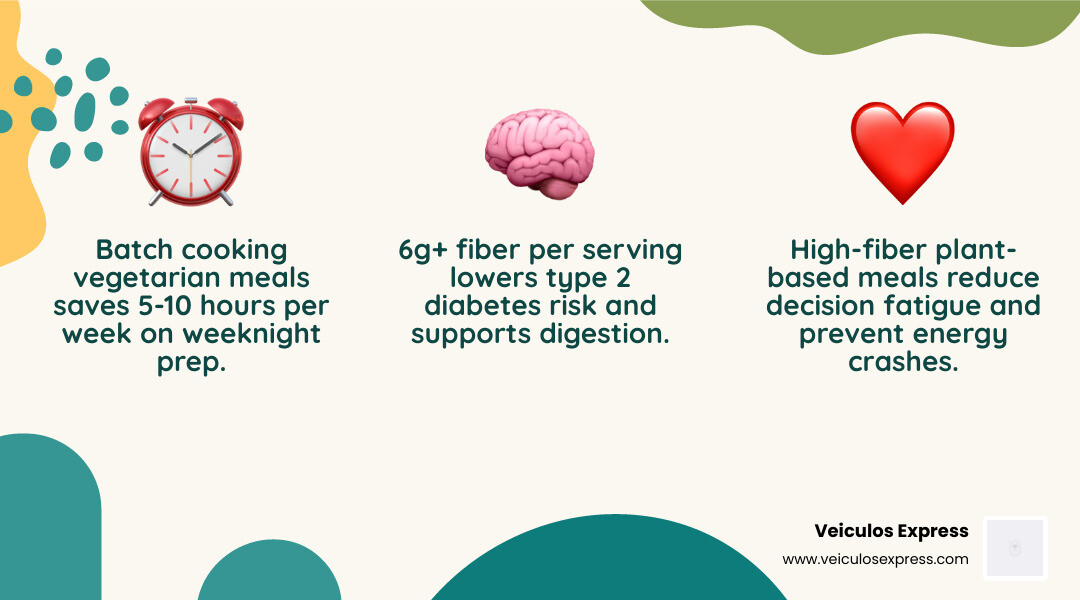
When we talk about prepare ahead vegetarian meals, we aren’t just talking about convenience. We are talking about a fundamental shift in how we fuel our bodies. One of the most significant advantages is the massive boost in fiber. High-fiber vegetarian lunches typically provide at least 6 grams of fiber per serving. This is vital because fiber supports healthy digestion and has been shown to lower the risk of type 2 diabetes.
By focusing on healthy and nutritious vegetarian recipes, we naturally incorporate more whole foods like legumes, nuts, and seeds. These ingredients are packed with micronutrients that often get sidelined in a standard “quick” meat-based diet. Furthermore, the high-fiber benefits for digestion mean you’ll feel fuller for longer, preventing that mid-afternoon energy crash.
Beyond the biology, there is the psychological win: defeating decision fatigue. We’ve all been there—staring into the fridge at 6:30 PM, unable to decide what to eat, only to end up ordering expensive takeout. When the meal is already prepped, the decision is made for you. It saves time, saves money, and ensures you stay on track with your health goals. Whether you are looking for healthy weeknight dinner recipes or just a way to survive Monday, prepping ahead is the answer.
Top Recipes and Ingredients for Success
Success in make-ahead cooking starts at the grocery store. Not all vegetables are created equal when it comes to sitting in a tupperware container for three days. To master meal prep 101 a guide for beginners, you need to focus on “sturdy” ingredients.
- Sturdy Vegetables: Broccoli, cauliflower, Brussels sprouts, carrots, and sweet potatoes are the MVPs. They maintain their structural integrity even after being roasted and reheated. Avoid delicate greens like spinach or arugula in the main dish; keep those separate until you’re ready to eat.
- Legumes: Lentils, chickpeas, and black beans are the backbone of vegetarian prep. They are cheap, high in protein, and actually taste better after sitting in spices for a day or two.
- Grains: Farro, quinoa, and brown rice are excellent. Farro, in particular, has a chewy texture that doesn’t get mushy.
- Tofu and Tempeh: These plant proteins soak up marinades beautifully. Pro tip: microwave tofu for a minute to expel excess water instead of pressing it for an hour!
A fantastic starter recipe is the Roasted Vegetable Burritos Recipe. You can roast a huge tray of mushrooms, sweet potatoes, and poblanos at 450°F, then use them in burritos, grain bowls, or even breakfast scrambles throughout the week.
High-Protein Prepare Ahead Vegetarian Meals
A common myth is that vegetarian meals aren’t filling. We’re here to bust that! By choosing high-protein vegetarian recipes, you can easily hit your satiety goals.
For breakfast, Greek yogurt bowls are a powerhouse, offering up to 24 grams of protein per serving. For lunch or dinner, look toward baked falafel bowls. These can provide a staggering 25 grams of protein and are incredibly easy to batch-cook. Other great options include tempeh meatballs—which are so hearty you won’t even miss the meat—and edamame-based salads. Adding a handful of hemp seeds or a dollop of hummus to any dish is a quick way to boost the protein count without extra cooking. Check out more high-protein vegetarian recipes to keep your energy levels high all week long.
Budget-Friendly Prepare Ahead Vegetarian Meals
Eating plant-based is one of the most effective ways to slash your grocery bill. Staples like black beans and sweet potatoes cost pennies compared to meat. A Vegetarian Enchilada Casserole is a perfect example of a budget-friendly meal that feeds a crowd. By using corn tortillas, canned beans, and seasonal veggies, you create a “Mexican Lasagna” that is both filling and affordable.
We also recommend buying grains in bulk and sticking to seasonal produce. If you are a student or on a tight budget, these vegetarian recipes for students show how you can eat like royalty on a shoe-string budget. A single head of cabbage or a large bag of lentils can be the base for three different meals!
Storage and Reheating Strategies for Quality
The biggest fear in meal prep is the “soggy factor.” To keep your meals tasting fresh, you need the right gear and the right technique.
- Invest in Glass: Glass containers are superior to plastic. They don’t retain odors, they are microwave and oven-safe, and they help prevent freezer burn.
- Cool Before Closing: Never put a steaming hot meal into the fridge or freezer. The steam creates condensation, which leads to sogginess and can even promote bacterial growth. Let it reach room temperature first.
- The Reheating Rule: For the best quality, reheat casseroles and pies in the oven. It restores the crispiness of the edges. If you must use a microwave, use a lower power setting and cover the dish with a damp paper towel to keep moisture in.
- Freezer Safety: Most vegetarian soups, chilis, and casseroles last 3-4 months in the freezer. Label everything! There is nothing more frustrating than “Mystery Container Monday.”
For more detailed advice, see our simple tips and tricks for meal prep or our guide on mastering make-ahead healthy lunches.
A 7-Day Sample Meal Plan for Busy Weeks
Ready to take the plunge? Here is a sample plan using the “batch cooking” method. Spend two hours on Sunday, and you’re set!
| Dish Type | Fridge Life | Freezer Life | Best Reheating Method |
|---|---|---|---|
| Lentil Soup / Chili | 4-5 Days | 4 Months | Stovetop |
| Enchilada Casserole | 3-4 Days | 3 Months | Oven (350°F) |
| Grain Bowls (Assembled) | 3 Days | Not Recommended | Room Temp / Microwave |
| Veggie Burger Patties | 3 Days | 3 Months | Skillet / Air Fryer |
| Pasta Bakes / Lasagna | 4 Days | 3 Months | Oven |
Sample Week:
- Monday: Make-ahead healthy lunches like a Quinoa & Black Bean bowl.
- Tuesday: Roasted Vegetable Burritos (using Sunday’s roasted veg).
- Wednesday: Vegetarian Chili (thawed from freezer or made Sunday).
- Thursday: Chickpea Feta Salad (prep the chickpeas ahead, add fresh greens today).
- Friday: Gnocchi Lasagna. Pro tip: Assemble on Sunday, freeze, thaw Thursday night, and bake Friday for a “fresh” dinner.
- Saturday/Sunday: Use up “fridge scraps” in a frittata or a “Happy Fridge Salad.”
For a deeper dive, check out this Meal Plan: 5 Easy, Make-Ahead Vegetarian Dinners.
Expert Tips for Families and New Parents
For new parents, prepare ahead vegetarian meals aren’t just a convenience—they are a survival strategy. The “fourth trimester” is exhausting, and decision fatigue is at an all-time high.
We highly recommend Vegetarian Freezer Meals for New Moms. Meals like Lentil Shepherd’s Pie or Spinach and Feta Pie are rich in iron and fiber, which are essential for postpartum recovery. If you’re a friend of a new parent, skip the baby clothes and bring a frozen casserole instead; it’s the ultimate love language.
For families with picky eaters, try “sneaking” veggies into familiar favorites. A carrot-based mac and cheese or a spaghetti squash lasagna can win over even the toughest critics. Having healthy weeknight dinner recipes for busy schedules means you spend less time hovering over the stove and more time with your kids.
Common Mistakes to Avoid When Prepping
Even experts make mistakes! Here’s how to avoid the most common pitfalls:
- Overcooking during prep: You will be reheating this meal. If you cook your pasta or veggies to mush on Sunday, they will be unpalatable by Wednesday. Aim for al dente.
- Forgetting the “Fresh” Element: A prepped meal can taste “flat.” Always keep a lemon, some fresh herbs, or a bit of avocado on hand to add right before serving. It brightens the whole dish.
- Ignoring Dietary Needs: If you are cooking for a mixed household, keep components separate. Use corn tortillas for gluten-free customization or keep cheese on the side for vegan swaps.
- Not Labeling: We’ve said it before, but we’ll say it again. Label your containers with the date and what’s inside!
For more inspiration on avoiding these errors, check out easy meal prep recipes for a healthy week.
Frequently Asked Questions about Vegetarian Meal Prep
Which vegetarian meals freeze the best?
Soups, stews, chilis, and casseroles (like lasagna or enchiladas) freeze beautifully. Grain-based dishes like burritos also do well. Avoid freezing dishes with high water-content veggies like cucumbers or raw tomatoes, as they will turn to mush upon thawing.
How long can I store prepped vegetarian meals in the fridge?
Most cooked vegetarian meals stay fresh for 3 to 4 days in an airtight container. Heartier items like bean salads or marinated chickpeas can often last up to 5 days.
How do I keep prepped vegetables from getting soggy?
The secret is roasting at high heat (400°F+) to develop a “skin” on the vegetable and ensuring they are completely cool before you seal the container. Also, store sauces and dressings in a separate small container and add them only when you are ready to eat.
Conclusion
At Veiculos Express, we believe that a healthy lifestyle shouldn’t be a source of stress. By embracing prepare ahead vegetarian meals, you are reclaiming your time and investing in your long-term well-being. Whether it’s a smoky sweet potato enchilada or a simple high-protein yogurt bowl, the effort you put in today will save your sanity tomorrow.
Ready to start your journey? Explore our full category/meal-prep for more tips, tricks, and life-saving recipes. Happy prepping!
